
A dishwasher that doesn’t clean dishes defeats its entire purpose. You load it up expecting sparkling results, only to find food residue, water spots, or grimy plates waiting for you.
This frustrating scenario is more common than you might think, and the good news is that many dishwasher problems have straightforward solutions. Understanding why your dishwasher isn’t performing as it should can save you time, money, and the hassle of rewashing loads by hand.
This guide will walk you through the most common causes of poor dishwasher performance, explain what you can fix yourself, and help you determine when it’s time to call in professional help.
Whether your machine is leaving dishes dirty, not draining properly, or making strange noises, you’ll find practical advice here to get your kitchen appliance service back on track.
Common Reasons Your Dishwasher Isn’t Cleaning Dishes
Several factors can prevent your dishwasher from doing its job effectively. Identifying the root cause is the first step toward a solution.
Clogged Spray Arms
Spray arms distribute water throughout the dishwasher during the wash cycle. When these become clogged with food particles, mineral deposits, or debris, water can’t reach all your dishes.
How to check:
- Remove the spray arms (usually they twist or pop off)
- Hold them up to the light and look through the holes
- Use a toothpick or wire to clear any blockages
- Rinse thoroughly before reinstalling
Dirty or Malfunctioning Filter
The filter catches food particles to prevent them from recirculating. A dirty filter reduces water flow and cleaning power, while a damaged filter may let debris back onto your dishes.
Maintenance steps:
- Locate your filter (typically at the bottom of the dishwasher)
- Remove and rinse it under running water
- Use a soft brush to remove stubborn buildup
- Check for cracks or damage that might require replacement
- Clean the filter at least once a month
Incorrect Loading Techniques
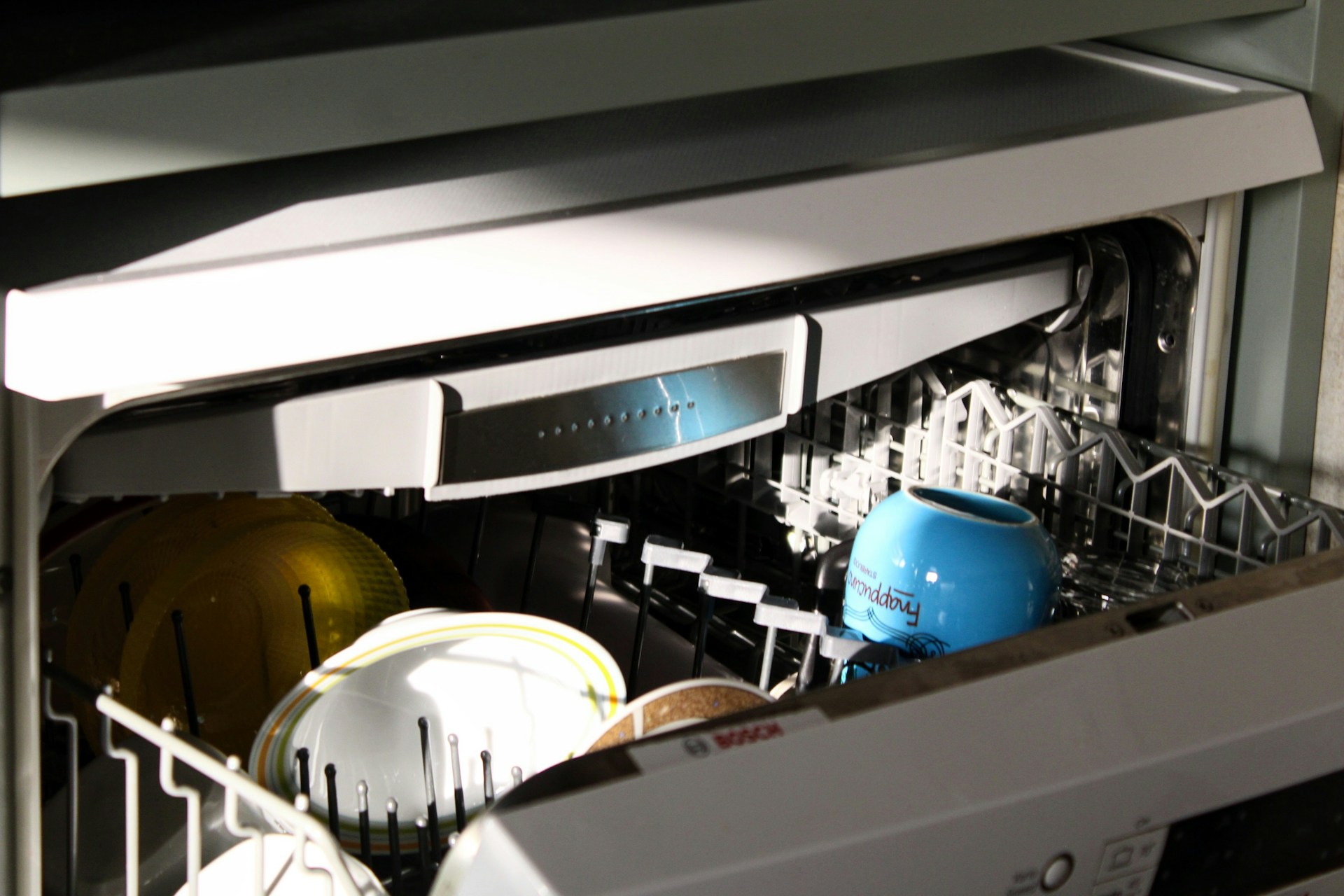
How you load your dishwasher matters more than you might think. Overcrowding or improper placement can block water spray and prevent proper cleaning.
Best practices:
- Place larger items on the sides and back
- Angle bowls and cups downward so water can drain
- Keep items from touching or overlapping
- Don’t block the spray arms with tall items
- Load silverware with handles down (except for sharp knives)
Water Temperature and Pressure Issues
Your dishwasher needs hot water to dissolve detergent and remove grease effectively. Problems with water temperature or pressure can significantly impact cleaning results.
Low Water Temperature
Dishwashers work best with water heated to 120-150°F. Anything cooler won’t activate the detergent properly or break down food residue.
Solutions:
- Run your kitchen faucet until the water is hot before starting the dishwasher
- Check your water heater temperature setting
- Use your dishwasher’s “heated wash” option if available
- Consider running longer or more intensive cycles during colder months
Inadequate Water Pressure
Low water pressure means your dishwasher isn’t getting enough water to clean effectively. This can stem from various sources.
Possible causes:
- Kinked or damaged water supply line
- Partially closed water valve
- Clogged inlet valve screen
- Home plumbing issues affecting overall water pressure
If adjusting the water valve doesn’t help, the inlet valve itself may need replacement—a job best handled by professionals specializing in Calgary dishwasher repair.
Hard Water Buildup
Calgary’s water contains minerals that can accumulate in your dishwasher over time. This buildup affects performance and can leave white film on dishes.
Prevention methods:
- Use a rinse aid regularly
- Run a dishwasher cleaner through an empty cycle monthly
- Consider installing a water softener
- Add a cup of white vinegar to an empty dishwasher and run a hot cycle
Detergent-Related Problems
The type and amount of detergent you use directly impact cleaning performance. Too much, too little, or the wrong kind can all cause issues.
Using the Wrong Detergent
Not all dish soaps work in dishwashers. Regular dish soap creates excessive suds that prevent proper cleaning and can damage your machine.
Detergent tips:
- Use only dishwasher-specific detergent
- Choose powder, gel, or pods based on your machine’s recommendations
- Store detergent in a cool, dry place to prevent clumping
- Check expiration dates—old detergent loses effectiveness
Incorrect Detergent Amount
More detergent doesn’t mean cleaner dishes. Too much can leave residue, while too little won’t cut through grease.
Guidelines:
- Follow manufacturer recommendations for your water hardness
- Start with less than you think you need
- Adjust based on results and water conditions
- Use less detergent if you have a water softener
Dispenser Malfunctions
If the detergent dispenser doesn’t open at the right time or opens too early, your dishes won’t get clean.
Troubleshooting steps:
- Ensure nothing blocks the dispenser door
- Check that the dispenser latch works properly
- Look for detergent buildup preventing proper opening
- Test the dispenser mechanism during a cycle
Mechanical and Technical Dishwasher Problems
Sometimes, poor cleaning performance indicates a mechanical issue requiring professional attention.
Worn or Damaged Gaskets
Door gaskets create a watertight seal. When they wear out, water leaks instead of building proper pressure for cleaning.
Signs of gasket problems:
- Water pooling under or around the dishwasher
- Visible cracks or tears in the rubber seal
- The door doesn’t close firmly
- Steam escaping during cycles
Faulty Heating Element
The heating element warms water during the wash cycle and dries dishes afterward. A broken element affects both cleaning and drying performance.
Indicators of heating element failure:
- Dishes remain wet after the dry cycle
- Water doesn’t feel hot during or after the wash
- Longer cycle times than normal
- Detergent pods do not fully dissolve
Pump or Motor Issues
The pump circulates water through the spray arms. When it malfunctions, water pressure drops and cleaning suffers.
Warning signs:
- Unusual grinding or humming noises
- Water is not draining completely
- Weak water spray from the spray arms
- Cycles are taking longer than usual
For these types of dishwasher problems, professional dishwasher repair services can diagnose the exact issue and determine whether repair or replacement makes more sense.
When to Call a Professional Repair Service
While many dishwasher issues can be resolved with basic troubleshooting, certain situations require expert intervention.
Complex Electrical Problems
Electrical issues can be dangerous for untrained individuals to handle. If your dishwasher trips circuit breakers, shows error codes you can’t resolve, or won’t power on at all, call a professional.
Persistent Performance Issues
When you’ve tried all the basic fixes but your dishwasher still underperforms, there’s likely an underlying mechanical problem that needs professional diagnosis.
Water Leaks and Drainage Problems
Significant leaks or drainage issues can cause water damage to your kitchen. These problems often involve pump replacements, hose repairs, or valve adjustments that require specialized tools and knowledge.
Warranty Considerations
If your dishwasher is still under warranty, attempting DIY repairs might void that coverage. Check your warranty terms before taking things apart.
Benefits of professional repair:
- Accurate diagnosis of complex issues
- Access to proper replacement parts
- Warranty on labor and parts
- Time savings and peace of mind
- Prevention of further damage from incorrect repairs
Professional technicians serving the Calgary area can typically provide same-day service for urgent dishwasher problems, getting your kitchen back to normal quickly.
Preventive Maintenance to Keep Your Dishwasher Running Smoothly
Regular maintenance prevents many common dishwasher problems and extends the life of your appliance.
Monthly Tasks
Filter cleaning: Remove and thoroughly clean the filter to prevent buildup that restricts water flow.
Spray arm inspection: Check spray arms for clogs and ensure they spin freely without obstruction.
Door seal check: Wipe down the door gasket and check for any signs of wear or damage.
Quarterly Maintenance
Deep cleaning cycle: Run an empty dishwasher with a specialized cleaner or white vinegar to remove mineral deposits and grease buildup.
Check water inlet: Inspect the water supply line for kinks, cracks, or signs of wear.
Interior inspection: Look inside for any loose items, debris, or signs of rust or damage.
Annual Professional Service
Consider scheduling annual maintenance with a qualified technician who can:
- Inspect all mechanical components
- Test heating elements and thermostats
- Check pump operation and water pressure
- Verify proper drainage
- Identify potential issues before they become major problems
Regular maintenance costs far less than major Calgary dishwasher repair or premature replacement.
Restore Your Dishwasher’s Cleaning Power
A dishwasher that doesn’t clean properly disrupts your entire kitchen routine. By understanding common causes—from clogged spray arms and dirty filters to water temperature issues and mechanical failures—you can often resolve minor problems yourself and know when to seek professional help.
Start with the simple solutions: clean the filter, check the spray arms, verify your loading technique, and ensure you’re using the right detergent. If these steps don’t restore performance, or if you notice signs of mechanical failure like leaks, unusual noises, or persistent error codes, it’s time to call in experts.
Professional kitchen appliance service technicians have the tools, training, and experience to diagnose complex dishwasher problems accurately and perform lasting repairs.
Rather than living with a malfunctioning appliance or spending hours on unsuccessful DIY fixes, professional repair typically proves faster and more cost-effective.
Don’t let an underperforming dishwasher force you back to hand-washing dishes. Whether your machine needs a simple fix or comprehensive repair, addressing the issue promptly prevents further damage and gets your kitchen running smoothly again.